Process · Strategy6 min
Why we design the boring pages first
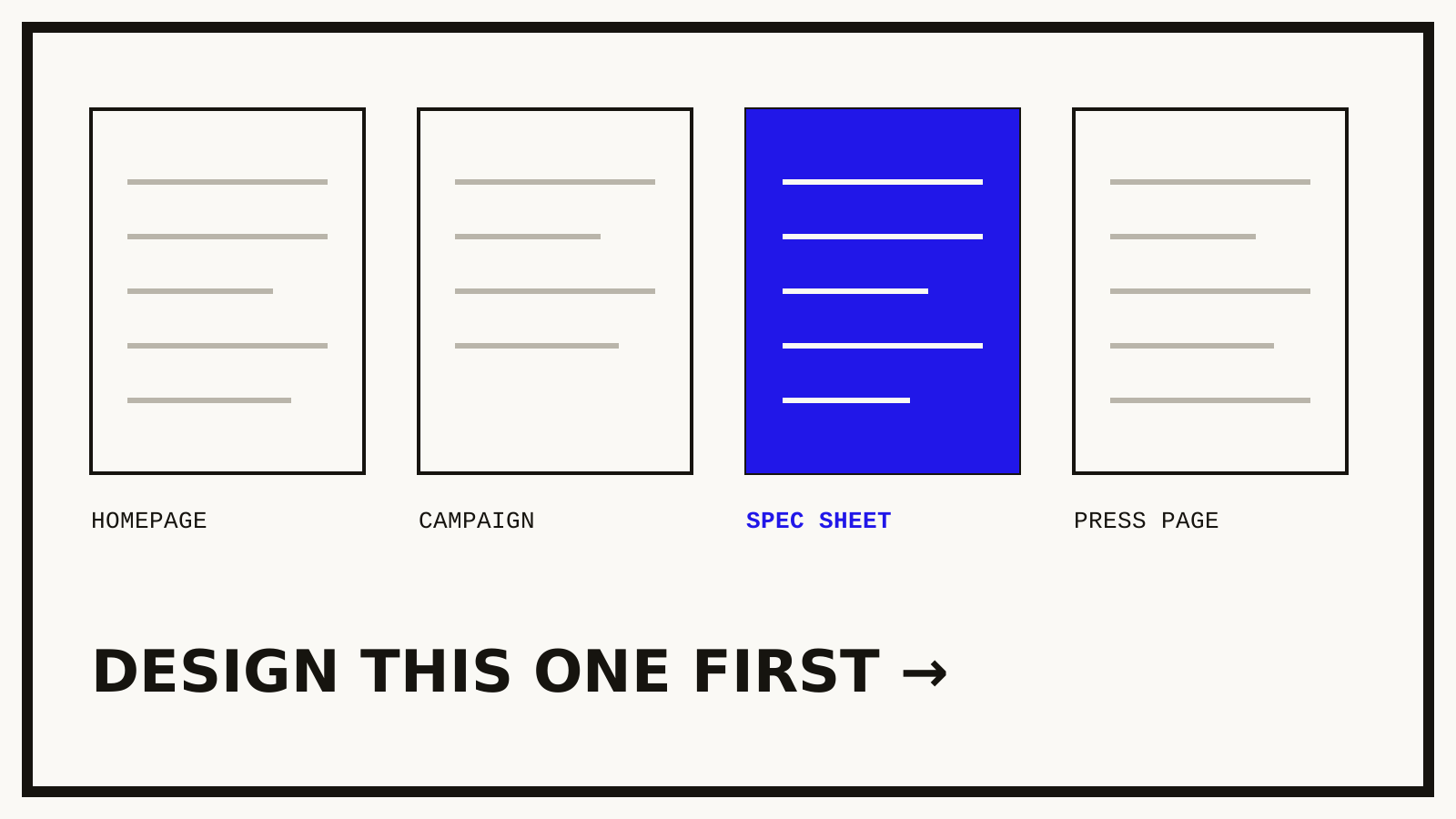
Homepages win awards. Specification sheets win contracts. A defence of starting where nobody is looking.
Loading —
The Northern Print Archive will be digitising for another decade. The interface had to make incompleteness a feature.
Priya Raghavan · · 6 min · Product · Engineering
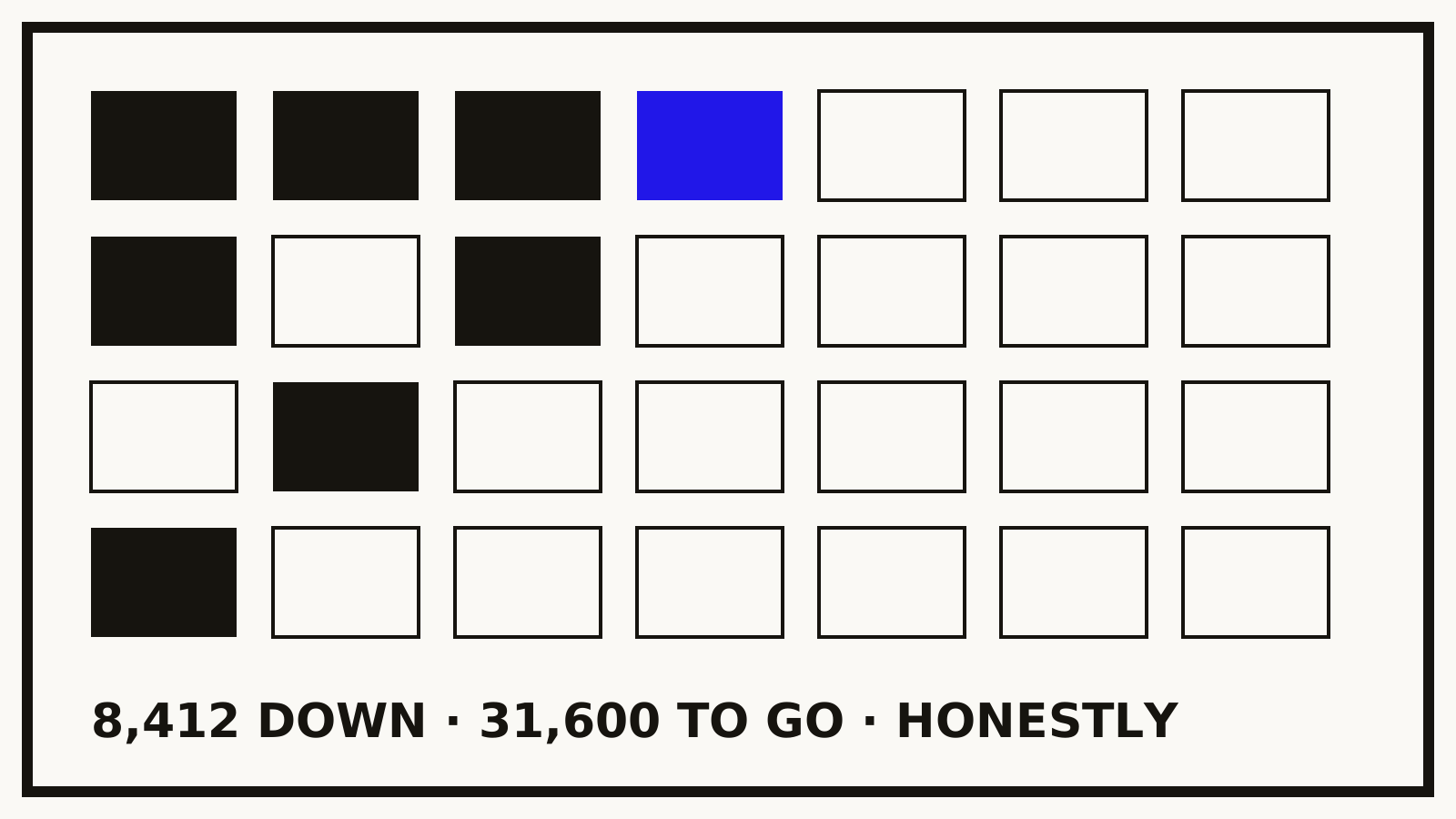
Most product design assumes a finished data set is coming. The launch plan says 'once the content is migrated', and the interface is designed for that imagined day. The Northern Print Archive forced us to abandon the assumption entirely: forty thousand items, two curators, roughly six hundred records catalogued a month. Do the arithmetic and the honest launch state is 'incomplete for the next decade'.
The usual answer is to hide the gaps — publish the photographed highlights and pretend the rest doesn't exist. But a researcher who can't find an item doesn't conclude the archive is unfinished; they conclude it doesn't hold the item. Invisible gaps destroy the archive's authority. So every catalogued item publishes immediately, photographed or not. An un-photographed record renders as a typed specimen card: printer, method, date, dimensions. It looks intentional because it is.
The homepage does something institutions almost never do: it counts honestly. Catalogued, photographed, remaining — three numbers, updated as the work happens. Progress became the archive's most-cited feature. It turns out an honest number is more trustworthy than a complete-looking façade, which shouldn't surprise anyone and reliably does.
Technically, permanence beats novelty. Records are static pages with stable, citable URLs — they're appearing in university reading lists now, which means those links need to outlive frameworks, redesigns, and us. The publishing pipeline is boring on purpose: a curator catalogues an item, and a page exists. No deploy party. Just Tuesday, six hundred times a month, for ten years.
Homepages win awards. Specification sheets win contracts. A defence of starting where nobody is looking.
Visible structure isn't an aesthetic tic. It's a contract with the reader about where things will be.
Eight to ten projects a year. Currently scheduling work for next quarter.
Start something →newwork@foundrynorth.example · +44 161 496 0233